
The Meaning of Remembrance
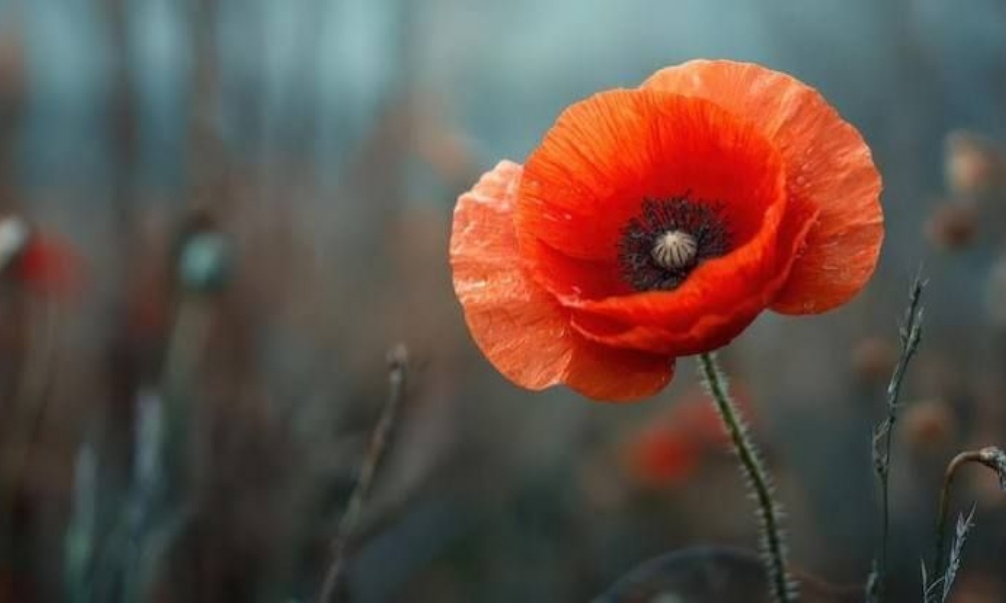
Mr Fogg's latest assembly talk forms the basis for this next blog instalment and considers the meaning of Remembrance, the powerful legacy of Old Oratorians who gave their lives in war, and the Christian hope that calls us not only to honour the past, but to help build a better future.
As a school community, we pause each November to remember those who made the ultimate sacrifice in service of others. This week, as we remember those who gave their lives, the value I want us to focus on is Hope. Not a vague optimism, but the Christian conviction that even in the darkest moments, God calls us to build a better future.
Last weekend was Remembrance Sunday and on Wednesday we marked Armistice Day – the day that the First World War ended. I am conscious that this week may seem a little strange to many of you. Nearly one fifth of you are from different countries and have different traditions and memorial days. Many of you have come from different schools and may have done things in a slightly different way. Remembrance is not simply about looking backwards. It is about understanding the sacrifices others made and recognising our responsibility to build the kind of world they hoped to leave behind.
In The Oratory Chapel there are two large plaques and, this week, the poppy wreaths that we placed there during Mass. The plaques record the boys from the school who died during the First and then the Second World Wars. The numbers really are shocking. You need to remember that the school was much smaller than it is now and yet 45 boys lost their lives during the Second World War. That is the same number of just boys that we have in the current 4th Form. Horrifically, the trench warfare of the First World War claimed even more lives, and 86 Oratorians gave their lives – the same as the entire U6th Form.
That is a particularly haunting image as many of the young Oratorians who marched off to The Somme, Ypres or Paschendale would not have been much older than the 18 year olds who sit here today. When I look around this room, I find that almost impossible to imagine."
On Wednesday we marked the 11th hour of the 11th day of the 11th month – the exact moment at which the guns fell silent on the battlefields in the First World War. We do this by assembling together as a school at our own remembrance garden down by the CCF parade ground. This place is a poignant reminder that we are remembering all those who have died in war, and the garden contains memorials to more recent old Oratorians who lost their lives in wars of this century. Just last year we lost George Hooley who died whilst helping to train soldiers in Ukraine. That reminds us that remembrance is not only about history. The cost of conflict is not something confined to old photographs and history books.
We will be gathering together to pay tribute to all who have suffered in war and so I ask you to arrive smartly, be wearing a poppy and to treat the service with the respect it deserves. We mark remembrance day with two minutes of silence at exactly the time that the guns fell silent – our opportunity to show our gratitude and respect (not least of all to the over 130 Oratorians on our boards). I would be grateful if tutors could also help reinforce these messages between now and Wednesday.
One of the famous features of the service is the trumpet music that marks the beginning and end of the silence. The first is “The Last Post” – the tune that was used to signal to all soldiers that the day was over and that nighttime had come. This can be viewed as purely negative – life is over for these soldiers and we are now thinking about the dead. But the silence ends with a different tune – "The Reveille". The tune used to tell armies that a new day has begun.
This is crucial to our understanding of remembrance in a Catholic school. Death and war are tragic, but they are not the end. The Last Post is followed by Reveille because Christians believe that darkness is followed by dawn, and death by resurrection. We remember those who gave their lives because they believed in something beyond themselves.
The young Oratorians whose names are on those plaques never had the chance to live the lives that many of us take for granted. They gave up their futures in the hope that others might enjoy peace, freedom and opportunity.
The challenge for us is not simply to remember them for two minutes on Armistice Day. The challenge is to honour them by the way we live. If we want to build a better world for which they sacrificed so much, then we must be people of courage, kindness, service and hope. Remembrance is not just about gratitude for the past. It is about responsibility for the future.
#OratoryEndeavour #OratoryCuriosity #OratoryConfidence #OratoryIntegrity #OratoryRespect #OratoryJoy